
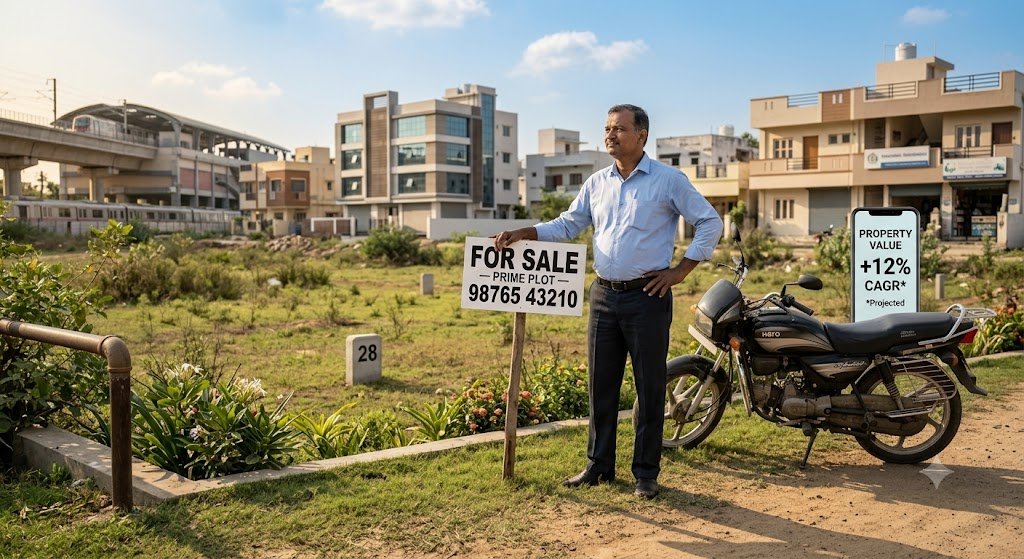
India’s real estate market is entering an important phase.
Over the next five years, from 2026 to 2031, real estate is likely to be shaped by urbanisation, rising incomes, infrastructure development, changing homebuyer preferences and growing demand for commercial spaces.
The big question is:
Will property prices continue to rise in India over the next 5 years?
The short answer is: growth is likely, but it will not be the same everywhere.
The biggest opportunities are expected to come from locations where jobs, infrastructure, connectivity and residential development grow together.
India Real Estate Forecast 2026–2031
Here are the major trends likely to define the next five years:
| Trend | Expected Direction |
|---|---|
| Residential demand | Strong |
| Premium housing | Strong |
| Affordable housing | Selective |
| Commercial real estate | Strong |
| Warehousing & logistics | Growing |
| Tier-2 cities | Increasing importance |
| Plotted developments | Growing interest |
| REITs | Increasing participation |
| Infrastructure-led locations | High potential |
The Indian market is already showing a shift toward quality developments and better-located projects. CBRE’s 2026 residential outlook expects demand fundamentals to remain resilient while premium housing continues to gain share.
1. Property Prices Are Likely to Keep Rising — But Selectively
One of the biggest mistakes investors make is assuming that every property in India will appreciate equally.
That is unlikely.
Over the next five years, properties in locations with:
- New roads and highways
- Metro or public transport connectivity
- Employment hubs
- New residential communities
- Schools and hospitals
- Commercial development
- Better civic infrastructure
are more likely to attract sustained demand.
In other words:
Infrastructure → Accessibility → Development → Demand → Property Value
This makes location selection more important than simply buying at the lowest price.
2. Tier-2 Cities Could Become Major Real Estate Opportunities
The next phase of India’s property growth will not be limited to Mumbai, Delhi, Bengaluru and other major metros.
As infrastructure improves and businesses expand beyond the largest cities, Tier-2 cities and developing urban corridors are becoming increasingly relevant.
Cities such as Patna, Lucknow, Jaipur, Indore, Bhubaneswar, Chandigarh and Coimbatore are examples of markets investors may continue to watch.
For buyers, the opportunity can be particularly interesting when a developing location combines:
Affordable entry price + infrastructure growth + population growth + improving connectivity.
3. Plots and Land Could Gain More Attention
Apartments are not the only real estate investment option.
Residential plots can become increasingly attractive to buyers who want flexibility over when and how they build.
A plot can offer:
- Greater control over construction
- Flexible home design
- Lower maintenance before construction
- Potential long-term appreciation
- Entry into developing locations at different price points
However, land requires particularly careful due diligence.
Before buying a plot, check title, land records, road access, land use, approvals, layout and applicable RERA requirements.
A cheaper plot is not necessarily a better investment if the documentation or development potential is uncertain.
4. Infrastructure Will Drive the Next Real Estate Cycle
Over the next five years, infrastructure could become one of the strongest indicators of real estate potential.
New highways, airports, metro networks, bridges, industrial corridors and business districts can change how people and businesses move across a city.
But investors should avoid buying purely on the promise of a future project.
Instead, look for locations where:
Infrastructure is improving + development is already visible + people are actually moving in.
This combination is generally more meaningful than a speculative announcement.
5. Commercial Real Estate Should Remain Strong
India’s commercial real estate market is also expected to remain an important growth segment.
Office demand is being supported by global capability centres, technology, professional services and expanding businesses.
Recent market commentary from CBRE indicates that India’s office market has remained strong, with leasing expected to continue growing in FY27.
At the same time, India’s growing services economy is creating a larger requirement for commercial buildings, offices, retail and logistics infrastructure.
This could create opportunities not only in established business districts but also in new commercial corridors around expanding residential areas.
6. Residential and Commercial Real Estate Will Become More Connected
A new residential development does more than create homes.
As population increases around a project, demand follows for:
Grocery stores → Clinics → Restaurants → Schools → Offices → Retail → Services
This is why emerging residential corridors can eventually develop their own commercial ecosystems.
For investors, studying where people are going to live can therefore be just as important as studying where businesses are operating today.
7. Premium Housing Will Continue to Grow
India’s housing market is also seeing a clear preference for better-quality homes.
CBRE’s 2026 outlook highlights a continuing “flight to quality”, with high-end housing gaining share as buyers increasingly look for larger homes and professionally managed developments.
This does not mean affordable housing will disappear.
Instead, the market is likely to become more segmented:
Affordable → Mid-market → Premium → Luxury
Different cities and micro-markets will perform differently within these categories.
8. Real Estate Technology Will Change How People Buy Property
The next five years will also make property discovery more digital.
Buyers are increasingly using:
- Google Search
- Property portals
- YouTube
- Virtual tours
- Digital maps
- Social media
- Online documentation
- AI-powered property research
This means developers will need to provide more than attractive advertisements.
Clear information, verified documentation, location transparency and digital accessibility will become increasingly important in building buyer trust.
9. REITs Could Make Commercial Real Estate More Accessible
Investing in physical commercial property can require significant capital.
Real Estate Investment Trusts (REITs) offer another way to participate in income-generating real estate without directly purchasing an office building or commercial property.
India’s REIT market is also expected to expand further, with recent market analysis pointing toward significant growth potential through 2030.
This could make real estate investing increasingly accessible to smaller investors.
10. Patna and Other Emerging Markets Could Benefit
For investors looking beyond India’s largest metros, cities such as Patna deserve attention.
Patna’s opportunity is linked to its role as Bihar’s major urban and commercial centre, while surrounding areas are seeing residential expansion and infrastructure development.
Locations such as Maner and Naubatpur are examples of areas where buyers are looking at plotted residential development around the wider Patna region.
For buyers considering plots in Patna, the key question should not simply be:
“How much is the price per square foot?”
Instead ask:
“What will this location look like five years from now?”
That means studying roads, connectivity, surrounding development, population growth, nearby facilities and the credibility of the developer.
What Should You Invest In Over the Next 5 Years?
There is no single property type that is right for everyone.
For end-users
A well-connected residential plot or home can provide long-term flexibility.
For long-term investors
Plots in carefully selected developing locations may offer potential for appreciation, but require strong due diligence.
For rental income
Commercial property and income-generating real estate may be worth evaluating.
For smaller investors
REITs can provide exposure to commercial real estate without purchasing physical property.
The right choice depends on budget, investment horizon, risk tolerance and location.
What Will Matter Most in Real Estate by 2031?
By 2031, the strongest real estate opportunities are likely to be concentrated around a few fundamentals:
1. Connectivity
How easily can people reach the location?
2. Employment
Are jobs and businesses moving into the area?
3. Infrastructure
Are roads, transport and civic facilities improving?
4. Population
Are more people actually moving into the area?
5. Livability
Are schools, hospitals, retail and everyday services available?
6. Documentation
Is the property legally clear and properly approved?
7. Developer credibility
Does the developer have a reliable track record?
Final Real Estate Forecast for India: 2026–2031
The next five years are unlikely to produce a uniform real estate boom across India.
Instead, location will become even more important.
Metropolitan cities are likely to remain major investment markets, while selected Tier-2 cities and developing corridors could offer new opportunities as infrastructure and urbanisation expand.
For buyers, the smartest approach is not to chase the cheapest property or the biggest promised return.
It is to identify locations where real demand, infrastructure and development are moving in the same direction.
If you’re considering buying property in India over the next five years, start by asking one simple question:
What will create demand for this property five years from today?
That question can often tell you more than today’s price.
Frequently Asked Questions
Will property prices increase in India in the next 5 years?
Property prices are likely to increase in many markets, but the rate of appreciation will vary significantly by city, location, property type and demand.
Is buying land a good investment for the next 5 years?
Land can be a long-term investment option, particularly in developing locations, but buyers should conduct thorough legal, title and development due diligence.
Which cities could see real estate growth in the next 5 years?
Major metros are expected to remain important, while selected Tier-2 cities and infrastructure-led growth corridors could also see increasing demand.
Is residential or commercial property better?
It depends on the objective. Residential property may suit end-users and long-term investors, while commercial property can be considered by investors seeking rental income and business exposure.
What should I check before buying property in India?
Check ownership, title, land records, approvals, land use, RERA registration where applicable, developer credentials, connectivity and the surrounding development.
Disclaimer
This article is for general informational purposes and should not be considered financial, investment or legal advice. Real estate markets can change based on interest rates, government policies, infrastructure, economic conditions and local demand. Buyers should independently verify property and regulatory information before making an investment decision.